SUMMARY DNS is a delegated tree: every zone can hand responsibility one level down. Understand that and you understand why changes propagate slowly and where to look for faults.
Every domain name is a path through the tree — from the root servers through the TLD to the authoritative server. Delegation is the handover of responsibility for a subtree.
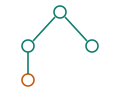
The name tree and who answers for what
Root servers do not know the answer for a specific name — they only know who sits one level below. TLD servers (.cz) hold the NS records of individual domains.
How a recursive query proceeds
A resolver walks the tree step by step: root → TLD → authoritative server. It caches each answer according to its TTL, so most queries never reach the root.
Where delegation breaks
The most common faults: NS records in the parent zone disagreeing with those in the zone itself (lame delegation), a missing glue record for an in-zone nameserver, or a TTL so long that a fix takes a day to show.
Key terms
delegation an NS record handing a zone to another server
glue record the IP address of an NS server inside the parent zone
resolver the server that walks the tree on the client’s behalf